
Guide
Tooth numbers on a treatment plan: what 11, 21 and 36 mean
On a treatment plan from Türkiye, and in most countries outside the UK and the US, every tooth has a two-digit number. The first digit is the quarter of your mouth and the second is the tooth, counted outwards from the middle. So 11 is your upper right front tooth, 21 your upper left front tooth and 36 your lower left first molar. A UK dentist would usually write the same teeth as UR1, UL1 and LL6.
How do the two digits work?
This is the FDI World Dental Federation system, also published as the international standard ISO 3950. It is the system most dentists outside the UK and the US use, so it is what you will usually see on a plan written in Türkiye.
The first digit is the quarter of the mouth, always from your own point of view:
- 1: upper right
- 2: upper left
- 3: lower left
- 4: lower right
The quarters go round in a circle, like a clock: 1 and 2 across the top, then 3 and 4 back along the bottom. So on a chart drawn facing you, 4 sits under 1 and 3 sits under 2.
The second digit is the tooth, counting from the middle of your mouth outwards: 1 central incisor, 2 lateral incisor, 3 canine, 4 and 5 the premolars, 6 and 7 the molars, and 8 the wisdom tooth.
The number is read as two separate digits: tooth 36 is "three six", not "thirty-six". And "right" and "left" are always yours. On a chart drawn facing you, your right side appears on the left of the page, which is why charts can look back to front at first.
The tooth chart
All 32 adult teeth with their international numbers.
Swipe sideways to see the whole mouth.
Upper right: 1
 18: upper right third molar (wisdom tooth)
- 17: upper right second molar
- 16: upper right first molar
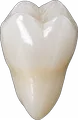 15: upper right second premolar
- 14: upper right first premolar
 13: upper right canine
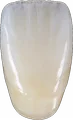 12: upper right lateral incisor
- 11: upper right central incisor
Upper left: 2
- 21: upper left central incisor
- 22: upper left lateral incisor
- 23: upper left canine
- 24: upper left first premolar
- 25: upper left second premolar
- 26: upper left first molar
- 27: upper left second molar
- 28: upper left third molar (wisdom tooth)
Lower right: 4
- 48: lower right third molar (wisdom tooth)
- 47: lower right second molar
- 46: lower right first molar
- 45: lower right second premolar
- 44: lower right first premolar
- 43: lower right canine
- 42: lower right lateral incisor
- 41: lower right central incisor
Lower left: 3
- 31: lower left central incisor
- 32: lower left lateral incisor
- 33: lower left canine
- 34: lower left first premolar
- 35: lower left second premolar
- 36: lower left first molar
- 37: lower left second molar
- 38: lower left third molar (wisdom tooth)
How do UK and US tooth numbers compare?
The same tooth can be written three different ways. In the UK most dentists use the Palmer system: the quarter as letters (UR, UL, LL, LR) and the tooth as 1 to 8. In the US the Universal system numbers all 32 teeth in one run, from 1 (upper right wisdom tooth) to 32 (lower right wisdom tooth).
Watch out for one trap: the same number can mean a different tooth. Tooth 21 is an upper front tooth in the international system, but a lower premolar in the US system. If a number on a plan looks wrong, ask which system it uses.
Upper teeth
| Tooth | International (FDI) | UK (Palmer) | US (Universal) |
|---|---|---|---|
| Upper right central incisor | 11 | UR1 | 8 |
| Upper right lateral incisor | 12 | UR2 | 7 |
| Upper right canine | 13 | UR3 | 6 |
| Upper right first premolar | 14 | UR4 | 5 |
| Upper right second premolar | 15 | UR5 | 4 |
| Upper right first molar | 16 | UR6 | 3 |
| Upper right second molar | 17 | UR7 | 2 |
| Upper right third molar (wisdom tooth) | 18 | UR8 | 1 |
| Upper left central incisor | 21 | UL1 | 9 |
| Upper left lateral incisor | 22 | UL2 | 10 |
| Upper left canine | 23 | UL3 | 11 |
| Upper left first premolar | 24 | UL4 | 12 |
| Upper left second premolar | 25 | UL5 | 13 |
| Upper left first molar | 26 | UL6 | 14 |
| Upper left second molar | 27 | UL7 | 15 |
| Upper left third molar (wisdom tooth) | 28 | UL8 | 16 |
Lower teeth
| Tooth | International (FDI) | UK (Palmer) | US (Universal) |
|---|---|---|---|
| Lower left central incisor | 31 | LL1 | 24 |
| Lower left lateral incisor | 32 | LL2 | 23 |
| Lower left canine | 33 | LL3 | 22 |
| Lower left first premolar | 34 | LL4 | 21 |
| Lower left second premolar | 35 | LL5 | 20 |
| Lower left first molar | 36 | LL6 | 19 |
| Lower left second molar | 37 | LL7 | 18 |
| Lower left third molar (wisdom tooth) | 38 | LL8 | 17 |
| Lower right central incisor | 41 | LR1 | 25 |
| Lower right lateral incisor | 42 | LR2 | 26 |
| Lower right canine | 43 | LR3 | 27 |
| Lower right first premolar | 44 | LR4 | 28 |
| Lower right second premolar | 45 | LR5 | 29 |
| Lower right first molar | 46 | LR6 | 30 |
| Lower right second molar | 47 | LR7 | 31 |
| Lower right third molar (wisdom tooth) | 48 | LR8 | 32 |
What about children's teeth?
Baby teeth use the same idea with different digits. In the international system the quarters are 5 to 8 (5 upper right, 6 upper left, 7 lower left, 8 lower right) and the teeth 1 to 5, so 51 is a child's upper right front tooth. UK dentists usually write baby teeth with letters A to E, such as URA, and the US system uses letters A to T.
What should you check on your plan?
- Every line names a tooth. A clear plan says, for example, "16: zirconia crown", not "upper back teeth". Our guide to what a treatment plan should contain explains the rest.
- The numbers match your mouth. If a number does not match the tooth you expected, ask before anything is booked. It is a quick question and far better asked early.
- Your own dentist can read it. If your UK dentist uses UR and UL, the tables above let either of you translate the plan line by line.
Got a plan with numbers you can't read?
Send us a message and a coordinator will go through it with you, tooth by tooth.
Your consultation and assessment are free, and asking commits you to nothing.
Related guides
- What a treatment plan should contain before you pay
- Questions to ask before dental treatment abroad
- Zirconium crowns in Turkey
Sources
- FDI World Dental Federation two-digit notation, standardised as ISO 3950, Dentistry: Designation system for teeth and areas of the oral cavity
- General Dental Council: Going abroad for dental treatment
General information about reading tooth numbers. Not clinical advice about your own teeth.
